Data exposure
What a stranger can pull out of the database with nothing but a browser and a little curiosity.
Case study
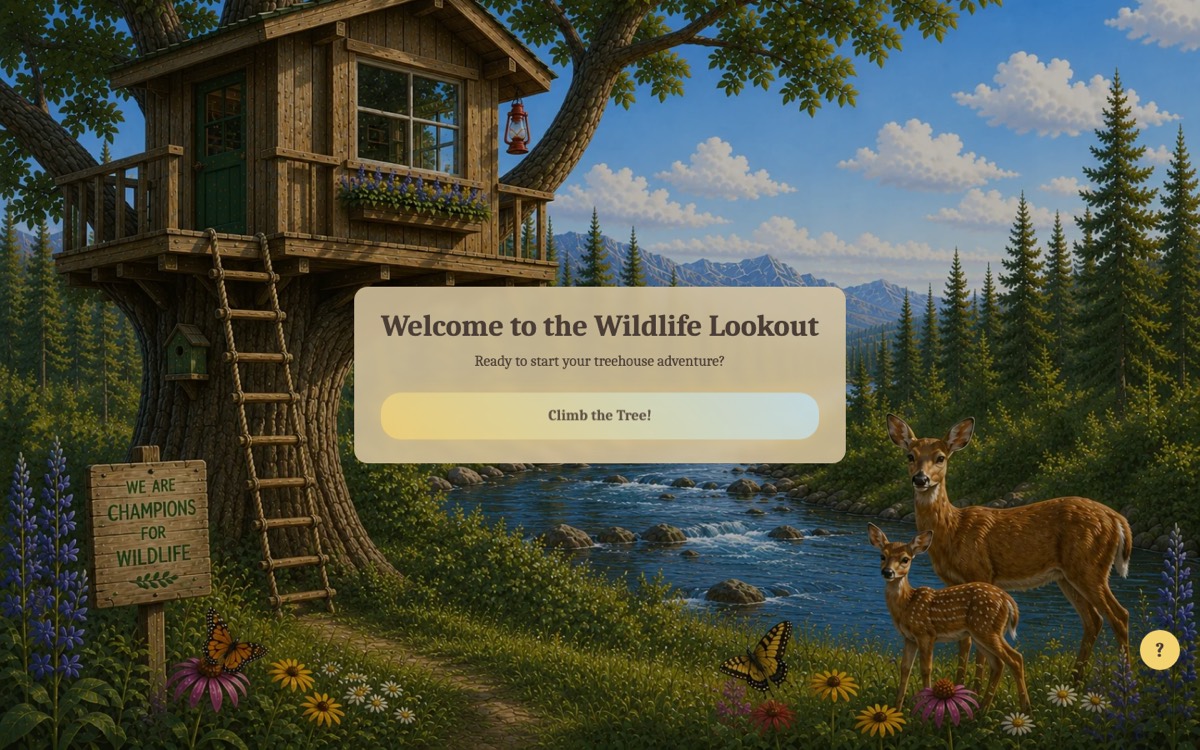
A treehouse adventure that teaches children about wildlife and ecosystems. The product was theirs. Getting it safe, stable and ready for real visitors was ours.
The brief
Wildlife Lookout teaches kids about wildlife and ecosystems through a treehouse adventure. By the time we were called in, the product existed and worked. What nobody could say with confidence was whether it would hold up once strangers arrived.
That is the gap a safe launch closes. Not another feature, not a redesign — an honest read of everything that could go wrong in public, a plan to close it, and a launch call made on evidence instead of nerve.
How we framed it
It works isn't the same as it's safe. Launch day is where the difference stops being theoretical.
What was actually at risk
They fail on the things nobody looked at: an open database, a key that shipped to the browser, a route that forgot to ask who you are. Here's what we changed about how this launch was approached.
What we read
The same six every time — not because it's a checklist we run and forget, but because this is where products break when real people arrive. Each one read by someone who has seen it go wrong before.
What a stranger can pull out of the database with nothing but a browser and a little curiosity.
What got shipped to the browser, what's sitting in the repo, and what should have stayed on the server.
Who can sign in, who can act as somebody else, and which routes forgot to ask for permission at all.
Where the build quietly diverged from what was asked for — the rule that got dropped somewhere along the way.
The queries, limits and background jobs that hold fine for one visitor and buckle at a thousand.
Sign-ups, uploads, edge cases — the flows nobody has run twice, where silence looks like success.
How it ran
Four steps, in that order, with an approval between each one. Nothing after the audit started without the client seeing what it would contain and what it would cost.
The result
The launch stopped being a hope and became a decision.
What they got
A public launch they could stand behind, and a written record of what was checked and what was fixed to get there.
What changed
Security, stability and readiness moved from assumptions to things somebody had actually looked at and closed.
What stayed theirs
The product, the idea and the credit. We didn't build Wildlife Lookout — we made it safe to open the doors.
Wildlife Lookout is their product and the credit for it is theirs. Our part was the launch: reading the app for the ways it could hurt them in public, fixing what mattered, and making the go / no-go call with them.
Questions
We hardened it for go-live. The app already existed and worked; what it hadn't had was an honest read of how it would behave with strangers in it. We did that read, produced a ranked fix plan, made the approved changes, verified each one, and called launch readiness together. Greenfield builds are a different engagement — that's DevStudio.
Because it works and it's safe are different claims. An app can do everything in the demo and still leave its database readable, its keys in the browser bundle, or a route that never asks who you are. Those don't show up in a walkthrough. They show up the first week you're public.
Six areas, every time: data exposure, keys and secrets, auth and access, drift from what you meant, behaviour under real load, and untested paths. Each is read by a human, not just scanned. The full method is on the Coherence & Security page.
The audit is a fixed one-time price. The fixes are priced per verified change, and the audit sets the count — so you see the number and approve it before any work starts. No open-ended hardening budget.
A fixed app should stay a fixed app. The Safe-Change Layer reviews every significant change before it becomes a problem — so new work doesn't quietly reopen what was just closed. It's optional, and it's added after the fixes, not sold with them.
Before you launch
If you're weeks from going live and nobody has read the app for the ways it could hurt you, that's the call to make. You'll get findings you can act on and a price for closing them.
01
A short call
You tell us what you've built, how it was built, and when you intend to be live.
02
The read
A few business days later you have findings in plain language, ranked, each with its fix named.
03
Your decision
You approve the changes worth making — or you take the report and do it yourself. Both are fine.
Launching soon?Know what's in your app first.
Book a call